Integrated Virtual-Physical Platform for
Multi-scale Safety Testing and Security Validation of Autonomous vehicles
The transition from Level 2 ADAS to Level 4 fully autonomous driving is currently bottlenecked by a critical lack of trust. While modern AI models perform exceptionally well in standard conditions, they remain vulnerable "Black Boxes."
We are building the world's first Integrated Virtual-Physical Validation Platform. By transforming digital uncertainty into verified, real-world safety standards, we ensure autonomous systems can survive both the chaos of nature and the malice of cyber threats.
Remote Operations Platform
UdriveTech
The Dual Threats to AI Autonomy
99.9% accuracy in simulation is a fatal illusion. The remaining 0.1% represents the boundary between a safe journey and a catastrophic failure. We categorize these fatal flaws into two distinct domains.
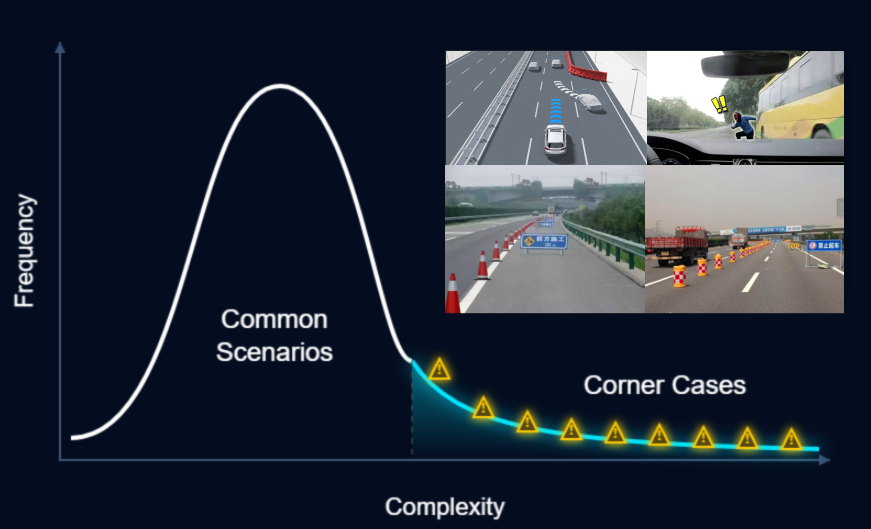
Safety: The "Invisible" Long-Tail
Autonomous vehicles are trained on millions of miles of "normal" driving data. However, the real world is chaotic. Extreme weather conditions, unpredictable pedestrian behavior, complex construction zones, and rare lighting anomalies form a "long tail" of edge cases.
- Sensor Degradation: Heavy rain or fog blinding LiDAR and cameras.
- Semantic Confusion: Misinterpreting reflections on wet roads as physical obstacles.
- Chaotic Agents: Unpredictable trajectories of jaywalkers or erratic drivers.
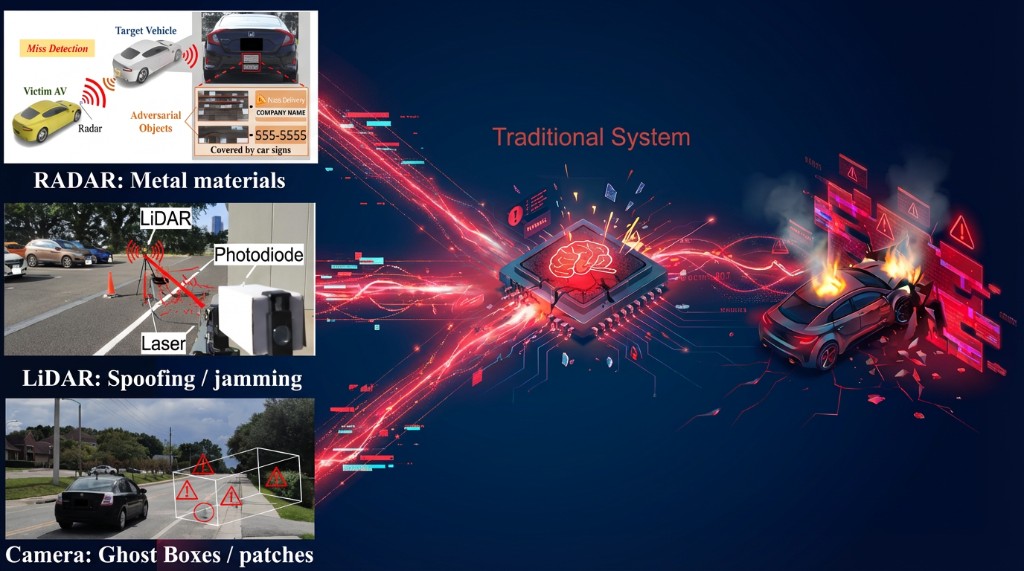
Security: The "Weaponized" AI
Beyond natural chaos, AI perception systems are highly susceptible to intentional, malicious manipulation. Adversarial attacks can subtly alter the physical environment to completely blind or mislead the vehicle's decision-making algorithms.
- Camera Ghosting: Adversarial patches that make stop signs invisible to AI.
- LiDAR Spoofing: Injecting fake laser pulses to create "phantom" vehicles.
- Data Poisoning: Corrupting the training pipeline to introduce hidden backdoors.
The Unified Shield Framework
To conquer both natural and malicious threats, we have engineered a holistic architecture. It provides synchronous safety and security validation across a continuous spectrum—from pure software simulation to physical vehicle deployment.
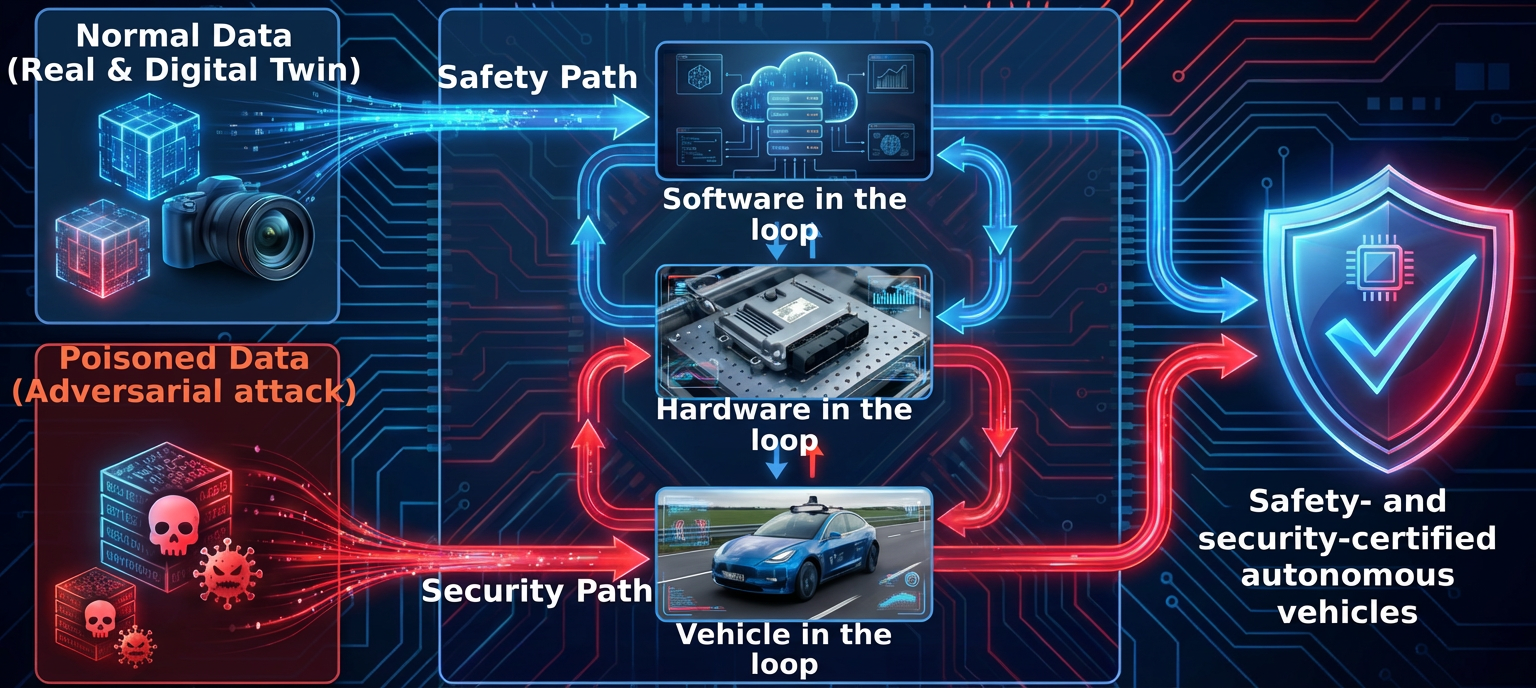
SIL: Infinite Scalability
Millions of miles are simulated overnight. We test algorithms against continuously generated synthetic corner cases in a pure software environment, ensuring rapid iteration and baseline robustness.
HIL: Compute Reality
Algorithms are deployed onto actual autonomous driving domain controllers (e.g., NVIDIA Orin). This validates system latency, thermal throttling, and hardware-specific vulnerabilities under stress.
VIL: Physical Truth
The final frontier. The software drives a physical vehicle on a test track, reacting to mixed-reality injections (virtual pedestrians projected into physical sensors) to bridge the sim-to-real gap.
Core Technical Capabilities
Engineering Safety and Security through Multi-Scale Virtual-Physical Verification.
AI Scenario Discovery
We do not rely on manual scenario creation. Our platform utilizes advanced AI to automatically discover and generate the most critical test cases that are likely to cause system failure.
- Appearance-Level Generation: Utilizing 3D Gaussian Splatting and NeRF to reconstruct photorealistic, highly complex intersection geometries and rare weather effects from sparse real-world data.
- Behavior-Level Generation: Employing Reinforcement Learning (RL) to train adversarial agents (other cars, pedestrians) that actively seek out the vulnerabilities in the ego-vehicle's planning algorithms.
Mixed-Reality Sandbox Testing
Before risking full-scale vehicles, we validate algorithms in a highly controlled, mixed-reality physical sandbox. This bridges the gap between pure simulation and full-scale physical testing.
- Deploying 1/28 scale robotic vehicles to test physical dynamics and latency.
- Sensor Injection: Synchronizing the physical sandbox with a closed-loop simulator (like CARLA). Virtual obstacles are injected directly into the physical robot's sensor data stream in real-time, forcing it to react to non-existent physical threats.
Full-Scale Urban Prototypes
Our research does not stop in the lab. We maintain high-fidelity 1st and 2nd generation full-scale prototype vehicles equipped with industrial-grade sensor suites for real-world validation.
- Industrial Sensor Suites: Equipped with 128-channel LiDARs, 4K automotive cameras, and millimeter-wave radars, mirroring the exact hardware used by top-tier OEMs.
- Urban Proving Grounds: Conducting rigorous testing in complex urban environments and designated proving grounds to validate defensive algorithms against physical adversarial props (e.g., spoofed traffic signs).
Global Impact & Industry Alliances
Our lab bridges academic excellence with industrial application, setting global benchmarks for autonomous vehicle safety and security standards.
Top Tier
World Championships
Argoverse & Waymo Open Dataset Challenges
15+
Core Patents Granted
US & CN Intellectual Property Protection
>$20M
Research Funding
Accelerating R&D and Commercialization
Commercialization & Market Strategy
The global autonomous vehicle testing and validation market is projected to reach $25B by 2030. Our platform unlocks this trust-driven frontier across multiple high-value sectors.
Target Customer Segments
Government Regulators
Providing scientific, quantifiable safety criteria and standardized testing frameworks for AV licensing, compliance, and smart city infrastructure planning.
Vehicle OEMs & Tier 1s
Shortening R&D cycles by replacing expensive real-world testing with high-fidelity SIL/HIL simulation, preventing costly post-launch recalls.
Research Institutes & STEM
Accelerating academic research and providing hands-on mixed-reality AI safety sandbox kits for university education and workforce training.
Projected Revenue Mix
Figures in HK$ Million (Estimated)
Enterprise Solutions
SaaS + NRE Fees
Comprehensive testing infrastructure for OEMs developing Level 3+ autonomous systems.
- Simulation Platform (Annual SaaS)
- Turnkey HIL/SIL Hardware Rigs
- Custom Corner Case Modeling
HK$ 500k / year
Regulatory & Cert
Service Fees
Independent, third-party safety validation and certification reports for compliance.
- Safety Validation Reports
- Policy & Standard Consultancy
- Standardized Dataset Access
HK$ 200k / vehicle model
STEM Education
Hardware + Licensing
Empowering the next generation of engineers with accessible, hands-on AI safety tools.
- 1/10th Scale Sandbox AV Kits
- AI/Robotics Courseware
- University Lab Setup Services
HK$ 100k / school / yr